

Before you flash: Flashing firmware will erase all data on your device. Back up contacts, photos, and apps before proceeding. FlashGuideHub is not responsible for any damage caused by following this guide.
About the Xiaomi Mi Note 2
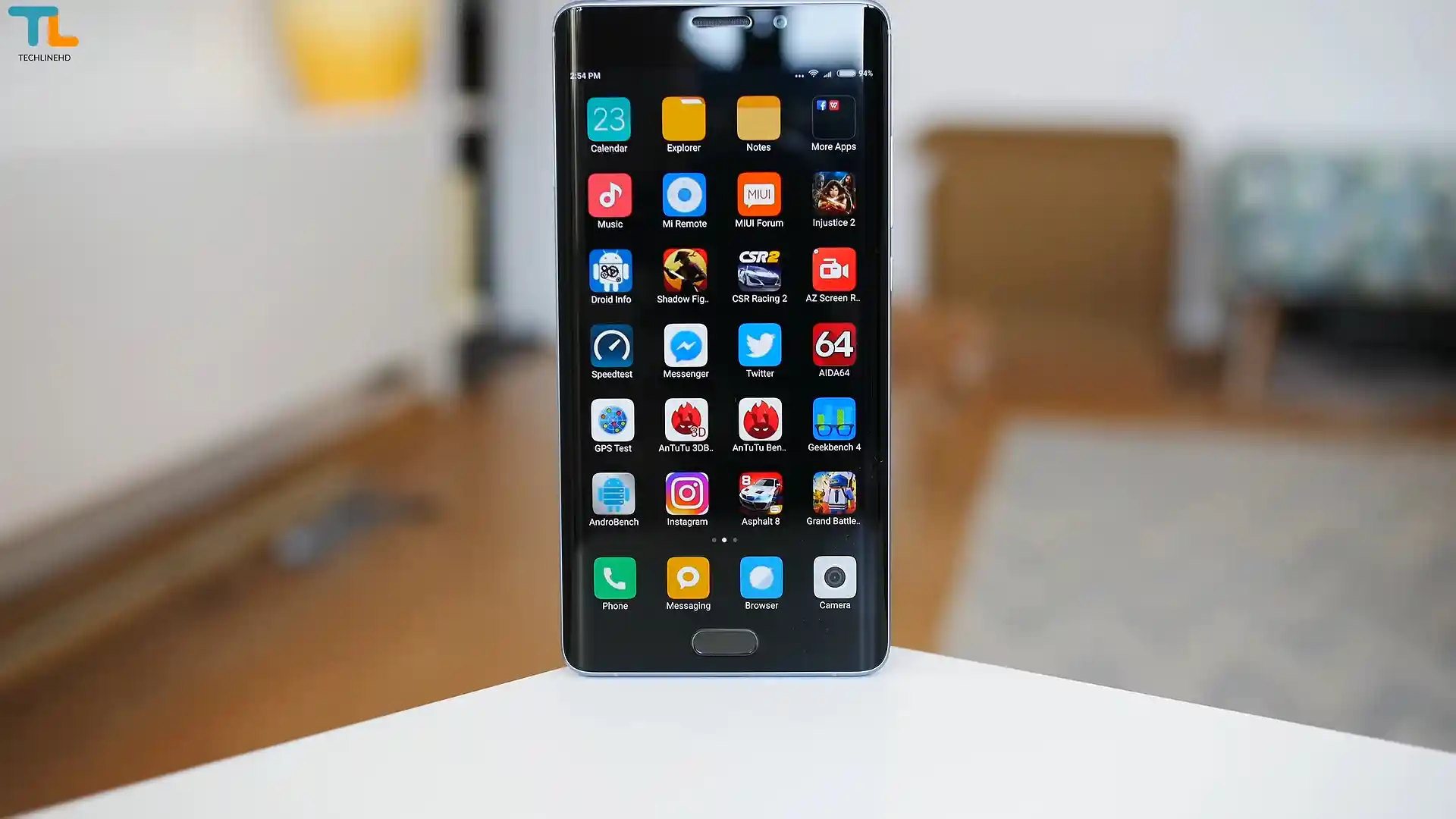
The Xiaomi Mi Note 2 (codename: scorpio) launched in November 2016 on Qualcomm's Qualcomm Snapdragon 821 MSM8996 Pro (14nm) platform with a curved 5.7-inch OLED screen, UFS 2.0 storage, and a 4,070 mAh battery.
Whether you are unbricking a dead unit via Qualcomm EDL 9008 with scorpio_global_images_V11.0.2.0.OADMIXM_20191023.0000.00_8.0_global_c8b7caa59d.tgz or installing Xiaomi.eu MIUI 11 using twrp-3.7.0_9-0-scorpio.img, follow the steps below.
Which Flash Mode Should You Use?
64-Bit Mi Flash Tool — UFS EDL 9008 (Locked or Bricked)
Writes multi-LUN UFS 2.0 factory partitions over Qualcomm QDLoader 9008 without needing an unlocked bootloader.
Mi Flash Tool / Fastboot CLI (Unlocked Bootloader)
Executes flash_all.bat or installs twrp-3.7.0_9-0-scorpio.img directly over the Android Bootloader USB-C interface.
TWRP / Local Updater (Recovery ZIP)
Installs xiaomi.eu_multi_MINote2_V11.0.2.0.OADCNXM_v11-8.0.zip inside Official TWRP 3.7.0_9-0 or miui_MINote2Global_V11.0.2.0.OADMIXM_6353b7fa7e_8.0.zip via MIUI Updater.
Essential Setup Before Flashing Mi Note 2 (scorpio)
Old 32-bit Mi Flash tools fail on UFS 2.0 sector alignment. Always use 64-bit Mi Flash on 64-bit Windows.
Connect a solid Type-C data cable straight into a rear motherboard USB 2.0 port so multi-LUN UFS transfers never stall.
Unpack the .tgz download twice using 7-Zip into C:\scorpio_fw\ without spaces so flash_all.bat and XML maps resolve cleanly.
Verify the 4,070 mAh battery holds healthy charge (or verify battery cable seating when using motherboard test points).
Mi Note 2 has no microSD slot and flash_all.bat erases internal storage. Copy photos off first, and back up /persist in TWRP.
64-Bit Mi Flash & UFS EDL 9008 Steps for Snapdragon 821
These 5 steps are tailored to the Xiaomi Mi Note 2 (Snapdragon 821). For screenshots, an interactive checklist, and troubleshooting, open the full Mi Flash Tool guide.
-
Install 64-bit Mi Flash Tool (2016.08.30+) and Qualcomm HS-USB QDLoader 9008 drivers
-
Extract scorpio_global_images_V11.0.2.0.OADMIXM_20191023.0000.00_8.0_global_c8b7caa59d.tgz twice to C:\scorpio_fw\
-
Boot to EDL 9008 (adb reboot edl / test points) if locked, or Fastboot (Vol Down + Power) if unlocked
-
Select C:\scorpio_fw\ inside 64-bit Mi Flash Tool, click Refresh, and pick "clean all"
-
Click Flash, let UFS 2.0 writes finish cleanly, and hold Power 10 seconds to reboot
Finding flash_all.bat & 8996 UFS Firehose Files in Snapdragon 821 Packages
Official Xiaomi Mi Note 2 Fastboot packages arrive as double-compressed .tgz files. Unpacking twice with 7-Zip places flash_all.bat at the top directory alongside an images folder holding prog_ufs_firehose_8996_ddr.elf, persist.img, and multi-LUN rawprogram0–5 XML maps:
flash_all.bat
Extracting scorpio_global_images_V11.0.2.0.OADMIXM_20191023.0000.00_8.0_global_c8b7caa59d.tgz twice with 7-Zip puts flash_all.bat at the outer level next to the images folder containing prog_ufs_firehose_8996_ddr.elf, persist.img, and rawprogram0–5 XML maps. Pick the outer directory in 64-bit Mi Flash Tool.
Codename scorpio covers ONLY the 5.7-inch curved-OLED Snapdragon 821 Mi Note 2 (models 2015211, 2015212, and 2015213). Never flash builds meant for Mi Note 3 (jason) or Redmi Note 2 (hermes).
Point 64-bit Mi Flash Tool at the outer folder containing flash_all.bat (e.g. C:\scorpio_fw\), never inside the images directory.
Keep "clean all" checked; choosing "clean all and lock" on cross-regional software will freeze startup.
Xiaomi Mi Note 2 Firmware Versions
Verified Global MIUI 11, China MIUI 11, Xiaomi.eu MIUI 11, and Official TWRP 3.7.0_9-0 packages for the Xiaomi Mi Note 2 (scorpio). Visit the full archive below for CDN mirrors and China Recovery ZIP details.
| Version | Region | Android Version | Size | MD5 | Download |
|---|---|---|---|---|---|
V11.0.2.0.OADMIXM |
Global (MI / MINote2Global) — MIUI 11 Final | Android 8.0 (Oreo), Nov 2019 | 1.73 GB | c8b7caa59d429cc5c5219e6795f17585 |
⬇️ Download |
V11.0.2.0.OADMIXM (OTA) |
Global Recovery ZIP | Android 8.0 (Oreo), Nov 2019 | 1.51 GB | 6353b7fa7ef060a29fcda858f0a748d9 |
⬇️ Download |
V11.0.2.0.OADCNXM |
China (CN / MINote2) — MIUI 11 Final | Android 8.0 (Oreo), Nov 2019 | 2.02 GB | 09ad0e5d3e84d7245b007ae76a8f0070 |
⬇️ Download |
V11.0.2.0.OADCNXM (Xiaomi.eu) |
Europe / Multilingual MIUI 11 (TWRP) | Android 8.0 (Oreo), Jan 2020 | 1.33 GB | c95029ed8ca4daaf78e3105fd9332b5c |
⬇️ Download |
TWRP 3.7.0_9-0 |
Official Custom Recovery (scorpio) | Fastboot / TWRP IMG | 26.08 MB | 8dd352ccee48116b7496c68fc7b6112a |
⬇️ Download |
Browse all 6 Android 8.0 MIUI 11, Xiaomi.eu & TWRP files on AndroidFirmwareFile.com → View full archive on AndroidFirmwareFile.com →
Choosing UFS EDL 9008, Fastboot & TWRP Recovery Options
The Xiaomi Mi Note 2 (codename scorpio, models 2015211 / 2015212 / 2015213) runs Qualcomm's Snapdragon 821 (MSM8996 Pro) with UFS 2.0 flash storage. Using scorpio_global_images_V11.0.2.0.OADMIXM_20191023.0000.00_8.0_global_c8b7caa59d.tgz or China scorpio_images_V11.0.2.0.OADCNXM_20191023.0000.00_8.0_cn_09ad0e5d3e.tgz, locked phones restore cleanly via EDL 9008 while unlocked phones flash over Fastboot.
For running Global MIUI 11 units, miui_MINote2Global_V11.0.2.0.OADMIXM_6353b7fa7e_8.0.zip installs via the Updater app. Unlocked owners switching to Xiaomi.eu MIUI 11 (xiaomi.eu_multi_MINote2_V11.0.2.0.OADCNXM_v11-8.0.zip) should install twrp-3.7.0_9-0-scorpio.img and format Data beforehand.
Fixing Mi Note 2 (scorpio) UFS, Encryption & Sensor Errors
Log: "Not enough storage" in Legacy 32-Bit Utility
Older 32-bit Mi Flash tools misread UFS 2.0 4096-byte sector geometry and hit memory limits pushing 1.7GB–2.1GB MSM8996 archives over EDL. Uninstall legacy 32-bit Mi Flash and install a 64-bit build (2016.08.30+ or 2017+) on 64-bit Windows.
Status: "FAILED (remote: Partition flashing is not allowed)"
Occurs when Fastboot commands run against a Mi Note 2 with a locked bootloader. Switch into Qualcomm EDL 9008 mode ("adb reboot edl", a deep-flash USB-C cable, or shorting the rear motherboard test points) and flash via COM port instead.
Decrypt Prompt: "Enter Password" / "Unable to mount /data"
Android 8.0 Oreo encryption prevents reading stock /data before installing xiaomi.eu_multi_MINote2_V11.0.2.0.OADCNXM_v11-8.0.zip cleanly. Inside TWRP, tap Wipe -> Format Data (type "yes"), reboot straight back to Recovery, and flash the Xiaomi.eu ZIP.
Hardware Alert: Dead Auto-Rotate, Gyroscope & Proximity
Triggered when aggressive partition wipes damage /persist on scorpio. Extract persist.img from your V11.0.2.0.OADMIXM or V11.0.2.0.OADCNXM images directory and restore it cleanly via TWRP or Fastboot/EDL to bring sensors back.
Need help decoding another UFS COM or Fastboot dialog? Mi Flash & UFS Qualcomm EDL Error Directory →
EDL Authorization, Multi-LUN UFS & RF Calibration Q&A
Yes. Like other late-2016 Snapdragon 821 Xiaomi flagships, the Mi Note 2 (scorpio) uses an unauthenticated Firehose loader (prog_ufs_firehose_8996_ddr.elf) inside its Fastboot download. Even on a locked bootloader, entering Qualcomm QDLoader 9008 lets you restore V11.0.2.0.OADMIXM or V11.0.2.0.OADCNXM directly without Xiaomi service-center login.
Because scorpio stores partitions across separate UFS 2.0 LUNs using 4096-byte sectors, its images folder splits tables across rawprogram0.xml through rawprogram5.xml. Loading the outer folder inside 64-bit Mi Flash Tool processes every XML map automatically so critical boot, xbl, and modem LUNs stay synchronized.
No. Xiaomi's stock flash_all.bat and Firehose rawprogram scripts intentionally keep modemst1, modemst2, and fsg untouched, preserving factory IMEI numbers, Wi-Fi/Bluetooth MAC addresses, and your 2015212 handset's 37-band RF calibration across clean restores.
Yes — especially before altering /data or custom ROMs. In Fastboot mode on an unlocked phone, running "fastboot boot twrp-3.7.0_9-0-scorpio.img" boots TWRP once in RAM so you can back up EFS and persist cleanly before flashing permanently with "fastboot flash recovery twrp-3.7.0_9-0-scorpio.img".
Ready to Flash?
Follow the full step-by-step Mi Flash Tool guide with interactive progress tracking, prerequisite checklist, and complete troubleshooting.