

Before you flash: Flashing firmware will erase all data on your device. Back up contacts, photos, and apps before proceeding. FlashGuideHub is not responsible for any damage caused by following this guide.
About the Xiaomi Redmi Note 14 4G
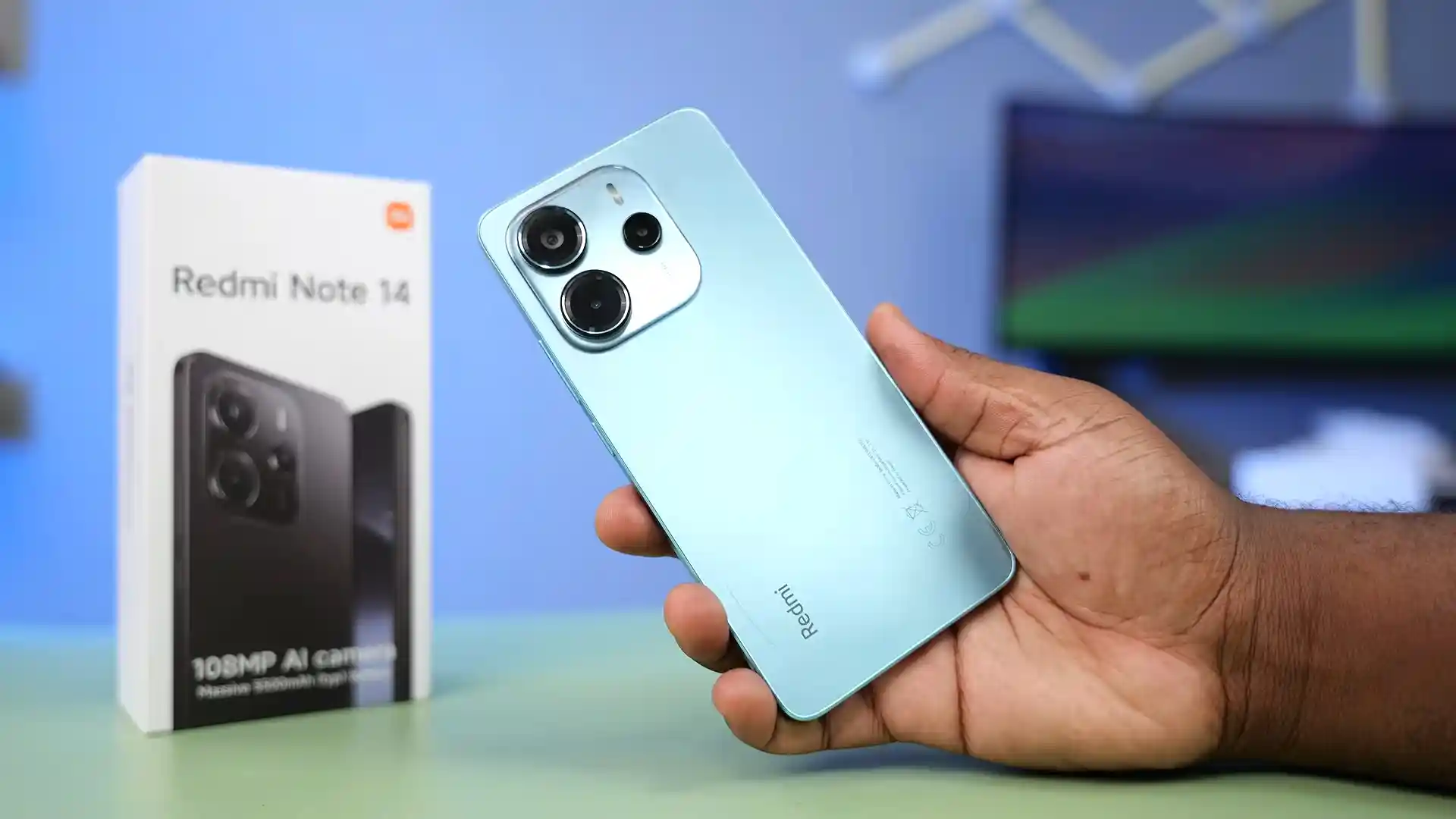
The Xiaomi Redmi Note 14 4G (codename: tanzanite) launched in January 2025 with MediaTek's MediaTek Helio G99-Ultra (6nm TSMC, MT6789) processor, UFS 2.2 storage, and a 5,500 mAh battery with 33W charging.
Whether you need to fix a bootloop after an update, recover an unlocked European handset with tanzanite_eea_global_images_OS3.0.302.0.WOGEUXM_20260826.0000.00_16.0_eea_41fff916de.tgz, or sideload OTA files on a locked bootloader, follow the tested instructions below.
Which Flash Mode Should You Use?
Mi Flash Tool (Fastboot ROM)
Official full-restore method for tanzanite. Executes flash_all.bat to rewrite boot, dtbo, preloader, super, and userdata over fastbootd. Requires an unlocked bootloader and erases all user data.
Mi Assistant (Recovery Sideload)
Stock recovery sideloading for locked bootloaders using signed EEA or Global OTA ZIP builds (such as tanzanite_eea_global-ota_full-OS3.0.302.0.WOGEUXM-user-16.0-433b0ba042.zip).
MediaTek BROM / SP Flash Tool (Emergency)
Low-level MediaTek MT6789 preloader/BROM recovery path when a handset cannot enter Fastboot. Note that modern HyperOS MediaTek security enforces SLA/DA authentication.
Essential Setup Before Flashing 7.5GB HyperOS 3.0 Files
Fastboot flashing requires Xiaomi Community unlock permission. Locked phones should use Mi Assistant with the Recovery OTA ZIP.
Install Xiaomi Fastboot / MTK VCOM drivers and SDK Platform-Tools v35.0.0+ so 7.5GB+ super.img sparse images write without timing out.
Use a short, snug Type-C data cable plugged straight into a rear motherboard USB 2.0 port to avoid USB 3.x xHCI controller dropouts.
Keep the 5,500 mAh battery well above 40% before flashing so power stays steady during userspace fastbootd writes.
Running flash_all.bat wipes internal UFS 2.2 storage clean. Save personal files off the device before beginning.
Mi Flash & Fastbootd Walkthrough for Note 14 4G (tanzanite)
A fast reference for flashing the Xiaomi Redmi Note 14 4G (Helio G99-Ultra) using Mi Flash Tool. For the complete walkthrough with images and error troubleshooting, see the full guide.
-
Confirm unlocked bootloader (or use Mi Assistant OTA for locked units)
-
Extract tanzanite_eea_global_images_OS3.0.302.0.WOGEUXM_20260826.0000.00_16.0_eea_41fff916de.tgz twice to C:\tanzanite_fw\
-
Install Google Platform-Tools v35+ and Xiaomi USB drivers on 64-bit Windows
-
Boot into Fastboot (Volume Down + Power) and plug directly into a rear USB 2.0 port
-
Select C:\tanzanite_fw\ in Mi Flash Tool, confirm "clean all", and flash
Finding flash_all.bat Inside Helio G99-Ultra Packages
Official Xiaomi Redmi Note 14 4G Fastboot packages arrive as compressed .tgz archives. Extracting the package twice with 7-Zip reveals flash_all.bat at the outer root alongside the images folder holding boot.img, dtbo.img, preloader, and the 7.5GB+ super.img:
flash_all.bat
After unpacking tanzanite_eea_global_images_OS3.0.302.0.WOGEUXM_20260826.0000.00_16.0_eea_41fff916de.tgz twice with 7-Zip, flash_all.bat appears at the top level next to the images folder containing super.img, boot.img, and preloader. Select that outer directory in Mi Flash Tool.
The OG firmware tag identifies the 4G Helio G99-Ultra Redmi Note 14 (tanzanite / 24117RN76G). Never flash packages built for the Dimensity-powered Redmi Note 14 5G or Note 14 Pro variants.
Always select the outer root directory containing flash_all.bat inside Mi Flash Tool (for example C:\tanzanite_fw\), not the inner images folder.
Crucial: Always confirm "clean all" (flash_all.bat) at the bottom right. Selecting "clean all and lock" on cross-regional software will trigger a boot freeze.
Xiaomi Redmi Note 14 4G Firmware Versions
Verified European EEA Fastboot & Recovery builds alongside Global and Indonesia Fastboot packages for the Xiaomi Redmi Note 14 4G (tanzanite). Visit the full archive below for Russia, Turkey, and Taiwan releases.
| Version | Region | Android Version | Size | MD5 | Download |
|---|---|---|---|---|---|
OS3.0.302.0.WOGEUXM |
Europe / UK EEA (EU) — HyperOS 3.0 | Android 16.0, Aug 2026 | 7.5 GB | 41fff916deb9431b07a968da844fda59 |
⬇️ Download |
OS3.0.302.0.WOGEUXM (OTA) |
Europe / UK EEA Recovery ZIP | Android 16.0, Aug 2026 | 5.4 GB | 433b0ba0429fc3024fe2b505a36a1d33 |
⬇️ Download |
OS3.0.305.0.WOGMIXM |
Global (MI) — HyperOS 3.0 | Android 16.0, Sep 2026 | 8.6 GB | f30e8da8b4cda380a22745cc3e33012d |
⬇️ Download |
OS3.0.303.0.WOGIDXM |
Indonesia (ID) — HyperOS 3.0 | Android 16.0, Sep 2026 | 7.7 GB | ab70fe265484a861f6c98ae8490c5132 |
⬇️ Download |
Browse all 12 HyperOS 3.0 regional Fastboot & OTA packages for Redmi Note 14 4G on AndroidFirmwareFile.com → View full archive on AndroidFirmwareFile.com →
Fastboot vs Mi Assistant & MT6789 BROM Notes
The Xiaomi Redmi Note 14 4G (codename tanzanite, model 24117RN76G) runs MediaTek's 6nm Helio G99-Ultra (MT6789) processor with 120Hz AMOLED, UFS 2.2 storage, a 108 MP main camera, and a 5,500 mAh battery with 33W charging.
With an unlocked bootloader, Mi Flash Tool cleanly restores factory partitions from tanzanite_eea_global_images_OS3.0.302.0.WOGEUXM_20260826.0000.00_16.0_eea_41fff916de.tgz or Global tanzanite_global_images_OS3.0.305.0.WOGMIXM_20260914.0000.00_16.0_global_f30e8da8b4.tgz. Phones still on a locked bootloader can sideload the signed EEA Recovery package (tanzanite_eea_global-ota_full-OS3.0.302.0.WOGEUXM-user-16.0-433b0ba042.zip) through stock Mi Recovery's Mi Assistant mode.
Fixing Redmi Note 14 4G Sparse Write, Path & Boot Freeze Errors
Status: "write to device failed" or Sparse Header Mismatch During super.img Transfer
HyperOS 3.0 super.img archives exceed 7.5 GB and rely on large sparse chunk commands inside userspace fastbootd. Older Android SDK Platform-Tools versions cannot write these oversized chunks. Replace your fastboot binaries with Google Platform-Tools v35.0.0 or newer and plug straight into a rear motherboard USB 2.0 port.
Mi Flash Dialog: "flash_all.bat not found" or Mismatched Directory Depth
This occurs when you point Mi Flash Tool at an unextracted .tar intermediate archive, a path with spaces, or inside the inner "images" subfolder. Extract the .tgz twice using 7-Zip and select the outer folder directly above flash_all.bat (for example C:\tanzanite_fw\).
Prompt: "Data is corrupted" on Stock Mi Screen After Reboot
Leftover File-Based Encryption (FBE) metadata on the userdata partition fails validation when moving across HyperOS 3.0 builds. Highlight "Wipe Data" in stock Mi Recovery using Volume Down, pick "Wipe All Data", and confirm with Power before rebooting.
Permanent Boot Freeze: "This MIUI version can't be installed on this device"
Caused by clicking "clean all and lock" (flash_all_lock.bat) on a handset running firmware from a different region than its factory NV profile. Always keep "clean all" checked before flashing; relocked cross-regional mismatches require authorized service recovery.
Need troubleshooting for another Fastboot or MediaTek error code? Fastboot & Mi Flash Error Directory →
Preloader Timing, Anti-Rollback & Slot Recovery Q&A
On the MediaTek Helio G99-Ultra (MT6789), the preloader USB VCOM interface only listens for roughly two to four seconds at power-on before handing control back to the normal boot chain. Install signed MediaTek MTK USB VCOM drivers ahead of time, launch your flashing utility as Administrator before plugging in the Type-C cable under 1 meter long, and note that modern MT6789 HyperOS security enforces SLA/DA authorization for low-level BROM writes.
Boot into Fastboot mode, run "fastboot getvar anti" in a command prompt, and compare the returned number with the anti-rollback index inside your firmware's android-info.txt file. If the firmware build index is lower than the phone's hardware fuse counter, the bootloader will block flashing.
No. Xiaomi's stock flash_all.bat script intentionally skips overwriting the /persist partition where factory optical fingerprint calibration and sensor baselines live. Your fingerprint scanner remains calibrated after a clean stock restore.
HyperOS 3.0 on Redmi Note 14 4G uses Virtual A/B partitions and automatically reboots from bootloader Fastboot into userspace fastbootd mid-script to write system, product, and vendor inside super.img. If USB power drops during slot writes, re-enter Fastboot, check "fastboot getvar current-slot", switch cleanly if needed, and restart flash_all.bat using Platform-Tools v35+.
Ready to Flash?
Follow the full step-by-step Mi Flash Tool guide with interactive progress tracking, prerequisite checklist, and complete troubleshooting.