

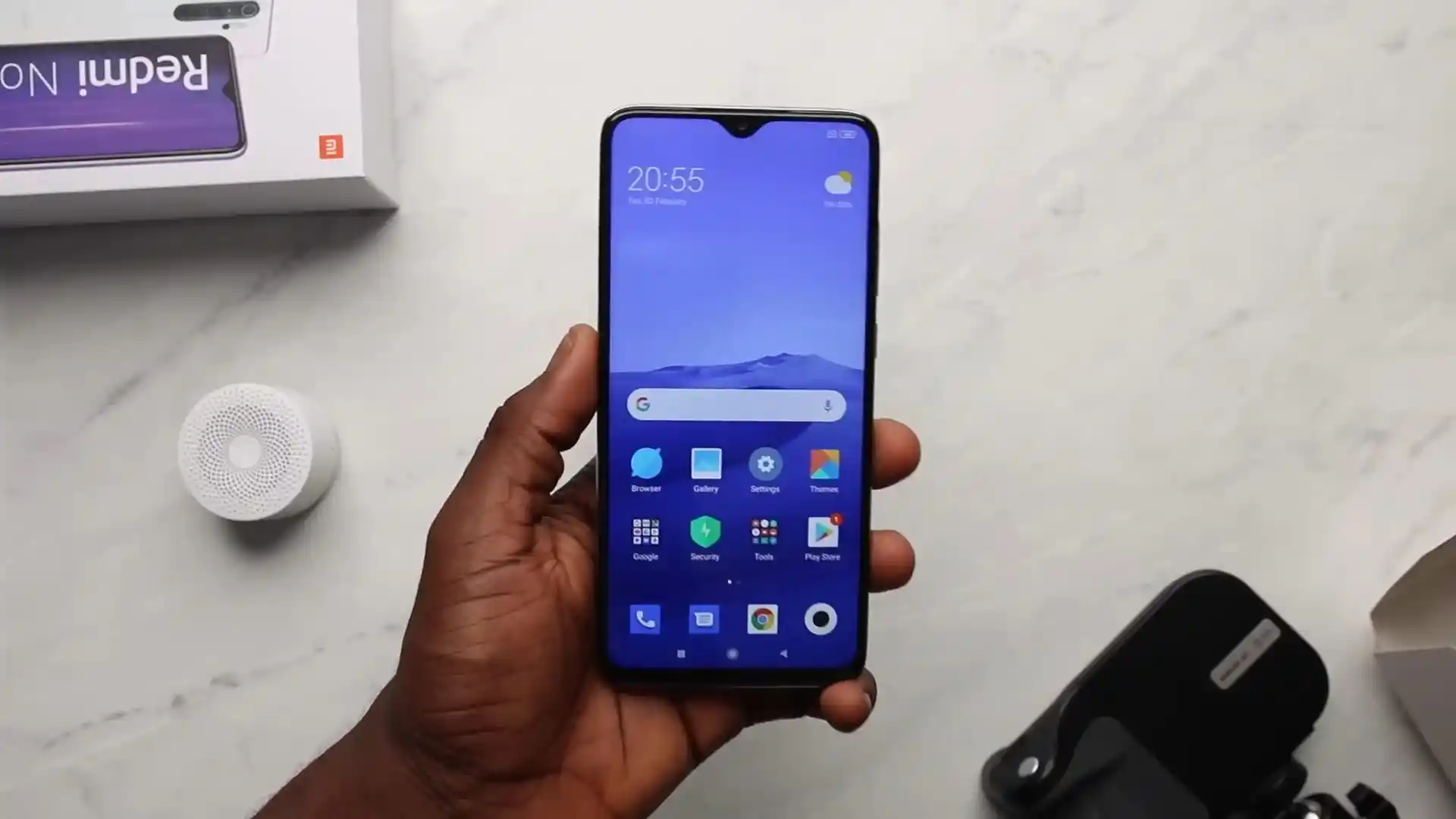
Before you flash: Flashing firmware will erase all data on your device. Back up contacts, photos, and apps before proceeding. FlashGuideHub is not responsible for any damage caused by following this guide.
About the Xiaomi Redmi Note 8 Pro
This workshop manual provides tested stock firmware flashing procedures for the Xiaomi Redmi Note 8 Pro (September 2019), built on the MediaTek Helio G90T MT6785V/CD (12nm FinFET) processor with a dedicated recovery partition and UFS 2.1 flash memory. Whether restoring factory software after an update failure, removing modifications, or recovering from a bootloop, this walkthrough outlines official Fastboot flashing.
The begonia platform pairs MediaTek's Helio G90T chipset with Mali-G76 graphics and strict SLA/DA security. Following the exact flashing steps and verifying firmware checksums ensures your device reboots reliably into official MIUI 12.5.
Which Flash Mode Should You Use?
Fastboot Mode
Standard bootloader flashing mode for Mi Flash Tool and command-line fastboot operations.
Stock Recovery Mode
Built-in recovery menu used for applying official recovery ZIP update packages and performing factory wipes.
MediaTek BROM Mode
Low-level BootROM emergency unbrick mode for deeply bricked devices that cannot enter Fastboot mode.
Custom Recovery (TWRP / PBRP)
Touch-enabled custom recovery for backing up partitions, wiping caches, and installing custom ROMs or Magisk root.
Pre-Flashing Prerequisites & Driver Verification
Ensure your handset holds at least 50% battery capacity to prevent unexpected shutdown while writing multi-gigabyte system partition chunks.
Connect directly to a native USB 2.0 port on your computer motherboard to avoid USB 3.0 controller handshake dropouts in Fastboot mode.
Use an official or certified USB data cable capable of sustained data transfer during large flash operations.
Fastboot flashing via Mi Flash Tool requires an unlocked bootloader through Xiaomi's official Mi Unlock software.
Use 7-Zip to extract TGZ archives twice down to the bare directory containing flash_all.bat without directory nesting.
When flashing custom recoveries or modifying system partitions, flash vbmeta with disabled verification to prevent AVB 2.0 bootloops.
5-Minute Fastboot & Mi Flash Walkthrough for begonia
5-step quick reference for the Xiaomi Redmi Note 8 Pro. Need visuals or troubleshooting help? The full Mi Flash Tool guide covers everything in detail.
-
Extract begonia_eea_global_images_V12.5.15.0.RGGEUXM_20220826.0000.00_11.0_eea_b8c6b15c15.tgz with 7-Zip to C:\begonia_fw
-
Boot handset into Fastboot mode by holding Volume Down and Power until bunny appears
-
Launch Mi Flash Tool, load firmware directory, and select clean all script
-
Run fastboot --disable-verity --disable-verification flash vbmeta vbmeta.img when flashing custom recovery
-
Execute flash and allow 5 to 8 minutes on first boot as user data initializes
Fastboot Script & MediaTek Scatter Architecture
Official Fastboot ROM packages for the Xiaomi Redmi Note 8 Pro (begonia / begoniain) use flash_all.bat to write partitions over USB. If flashing through SP Flash Tool in emergency BROM mode, the firmware requires MT6785_Android_scatter.txt to map the physical UFS flash memory blocks.
MT6785_Android_scatter.txt
Xiaomi Fastboot packages for MediaTek Helio G90T handsets include automated batch scripts for Windows and shell scripts for Linux/macOS. For emergency BROM flashing via SP Flash Tool, the MT6785 scatter file defines partition addresses across UFS 2.1 storage.
Always verify your device reports codename begonia or begoniain before flashing. Never flash packages meant for Snapdragon-based 2019 Redmi Note 8 variants (ginkgo or willow), which will cause an immediate hard brick into MediaTek BROM state.
Verified Fastboot Packages for Redmi Note 8 Pro (begonia)
Official Fastboot ROM packages for the Redmi Note 8 Pro (begonia / begoniain) are listed below. Each package is verified for clean factory restoration.
| Version | Region | Android Version | Size | MD5 | Download |
|---|---|---|---|---|---|
V12.5.15.0.RGGEUXM |
EEA (Europe) | 11.0 | 4.36 GB | b8c6b15c15bb5edf8ce68e0393d2ae84 |
⬇️ Download |
V12.5.5.0.RGGINXM |
India (begoniain) | 11.0 | 3.10 GB | 3ac596580ef228a618d3ae879933c34e |
⬇️ Download |
V12.5.6.0.RGGCNXM |
China Domestic | 11.0 | 4.02 GB | fbed701a771dbfc88be9cf8f64222378 |
⬇️ Download |
TWRP 3.7.0_9-0 Official |
Global (TeamWin) | 9.0 - 11.0 | 30.64 MB | 1858476c457c5f1098578ae2ff379d23 |
⬇️ Download |
Looking for additional regional builds, historical MIUI versions, or custom recovery packages? Browse the complete archive on AndroidFirmwareFile
MediaTek Helio G90T Architecture & BROM Protection Notes
The Xiaomi Redmi Note 8 Pro (begonia) features a Non-A/B System-as-Root partition scheme with a dedicated physical recovery container. Fastboot packages such as begonia_eea_global_images_V12.5.15.0.RGGEUXM_20220826.0000.00_11.0_eea_b8c6b15c15.tgz flash full system, vendor, and boot partitions directly over USB. Ensure an uninterrupted connection during the transfer to prevent partition corruption.
Troubleshooting Redmi Note 8 Pro Flashing & BROM Errors
error:status_sec_auth_file_needed (0xC007000B)
This error occurs in SP Flash Tool when attempting to flash the Helio G90T in BROM mode without an authorized Xiaomi SLA/DA authentication file. The G90T preloader blocks unverified flash commands. Resolve this by running mtkclient to bypass SLA authentication before connecting SP Flash Tool, or flash stock firmware through Fastboot mode via Mi Flash Tool instead.
FAILED (remote: 'Anti-rollback check failed')
Xiaomi's bootloader rejects the flashing script because the firmware package contains an Anti-Rollback (ARB) index lower than what is currently programmed into your phone's one-time programmable (OTP) fuses. Never force older Android 9 or early Android 10 builds if your phone is already running MIUI 12.5 (Android 11). Flash the latest matching V12.5.15.0 or V12.5.8.0 package.
error: cannot load 'recovery.img' / Device Not Found
Fastboot CLI cannot locate the recovery binary or loses USB connection during handshake. Ensure the recovery file sits in the same directory as fastboot.exe without duplicate file extensions (e.g. twrp.img.img), connect via a rear USB 2.0 motherboard port, and reinstall the Google Android Bootloader Interface driver via Device Manager.
DM-Verity Validation Trap (Red State Halt)
After flashing a custom image, the phone halts with a dm-verity warning screen or loops continuously. Android Verified Boot (AVB 2.0) detected an altered partition hash. Put the handset back into Fastboot mode and execute "fastboot --disable-verity --disable-verification flash vbmeta vbmeta.img" using the stock vbmeta from your MIUI firmware package.
Encountered an issue during flashing? Review our tested fixes for common MediaTek Helio G90T flashing errors below. Troubleshooting & Error Guide →
Redmi Note 8 Pro Workshop Troubleshooting FAQ
This is a harmless cosmetic log message generated by newer Mi Flash Tool releases when selecting "clean all" (flash_all.bat). The flashing script finishes completely and reboots your phone, but Mi Flash attempts to search the console log for a lock confirmation string that flash_all.bat deliberately does not produce. As long as the elapsed time shows 200 to 400 seconds and the phone reboots to the MIUI logo, the flash succeeded.
Never select "Format All + Download" in SP Flash Tool under any circumstance. On the MediaTek Helio G90T platform, selecting Format All wipes the protected NVRAM, NVDATA, and proinfo memory blocks. These partitions hold your device-unique IMEI numbers, baseband calibration tables, and Wi-Fi/Bluetooth MAC addresses. Wiping them causes permanent loss of cellular network connectivity. Always use "Download Only" mode when flashing with SP Flash Tool.
A completely black screen with connection detected as "MediaTek USB Port" (VID 0e8d / PID 0003) indicates that the Helio G90T has entered emergency BootROM (BROM) mode due to a corrupted preloader or recovery signature failure. To revive it, use open-source mtkclient to disable watchdog timers and execute the kamakiri SLA/DA authentication bypass. Once the bypass succeeds, you can run SP Flash Tool to flash the factory preloader, lk, boot, and recovery images.
Stock MIUI firmware contains an automated restoration routine inside /system/bin/install-recovery.sh. If you flash a custom image like twrp-3.7.0_9-0-begonia.img and allow the phone to boot normally into the Android operating system, stock MIUI will detect the altered signature and overwrite TWRP with the stock Mi recovery during startup. Booting directly into recovery mode first allows TWRP to patch this routine automatically.
Ready to Flash?
Follow the full step-by-step Mi Flash Tool guide with interactive progress tracking, prerequisite checklist, and complete troubleshooting.